The Bench · 21 September 2026
Which Kindle: five readers, and the question each one answers
Amazon sells five e-readers that all do the same thing — black text on a grey page that lasts weeks on a charge. What separates them is size, water, colour and a pen, and each of those decides what you can buy to protect it afterwards.
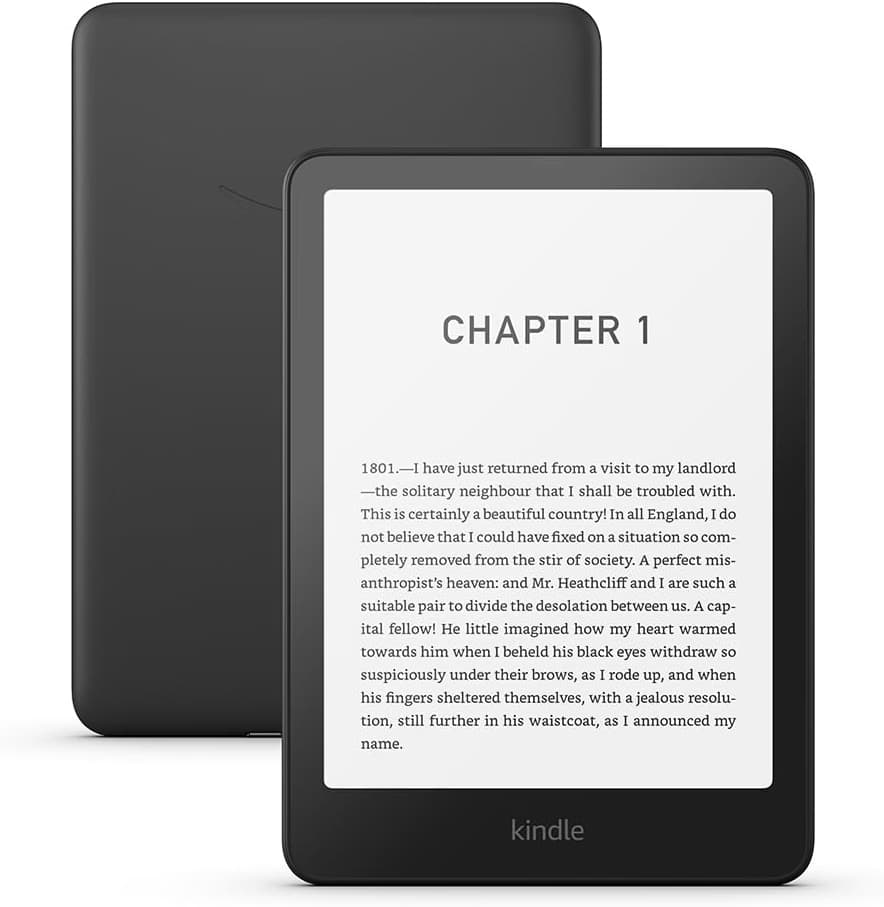
Every Kindle on sale prints 300 pixels per inch of black text on a grey page and runs for weeks on a charge. That is the part people worry about, and it is the part that was settled years ago. What actually separates the five is a short list — how big the page is, whether it survives a bath, whether it does colour, and whether it takes a pen. Answer those four and the price sorts itself out.
Start with the screen, because the case follows it
Screen size is not a comfort preference here, it is a purchasing constraint. Amazon has sold a 6-inch Kindle, a 6.8-inch Paperwhite and now a 7-inch Paperwhite under names that barely changed, and the accessory aisle has never caught up. A cover cut for the 11th-generation Paperwhite will not clip on to the 12th. A Paperwhite cover is visibly too large for the small Kindle. Choose the reader first and buy the case against the exact generation afterwards — that mismatch is the entire reason this index exists.
If you want the cheapest way in: the standard Kindle
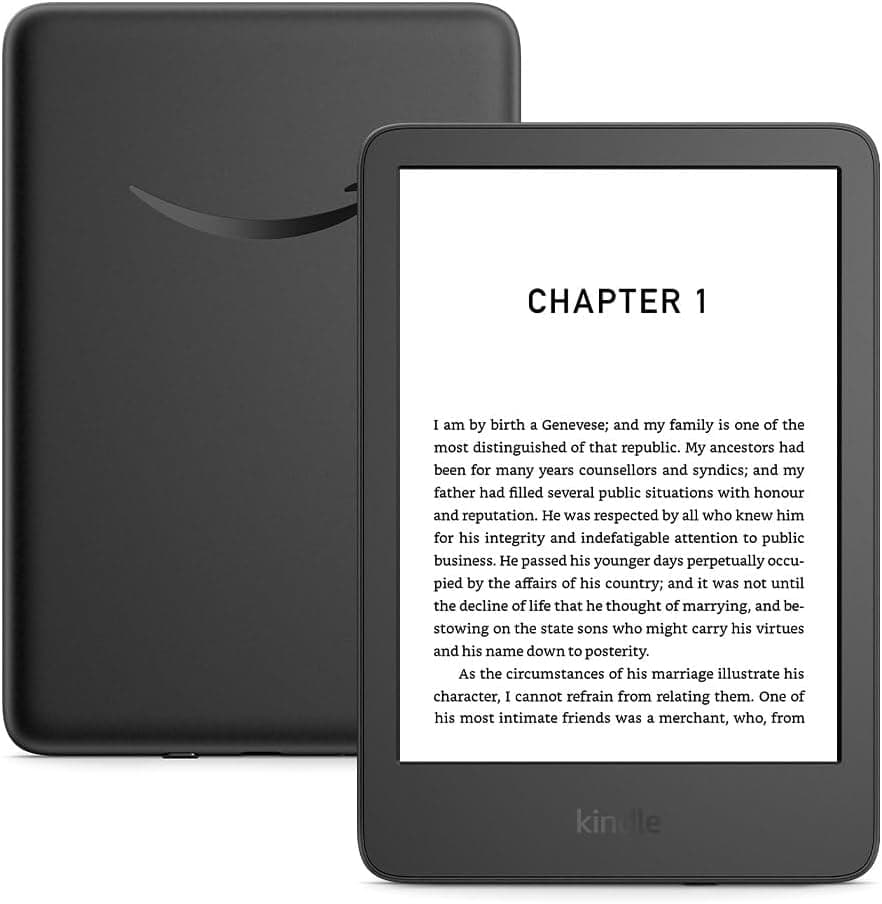
6-inch, 300ppi, 16GB. The lightest of them, and the only one that is not waterproof.
£104.99 at AmazonThis is the paperback of the range: six inches, one hand, and it goes in a coat pocket rather than a bag. The text is the same 300ppi as the Paperwhite, so nobody reading a novel on it is missing anything at all. What you give up is the IPX8 rating and the warm front light, which makes it a sofa and commute reader rather than a bath one, and the smaller page means more page turns — noticeable in anything with tables, footnotes or code in it. If your reading is fiction and it happens indoors, the money saved here is not buying you a worse book.
If you read in the bath, the pool or the sea: the Paperwhite
7-inch, IPX8, adjustable warm light. The default, and the one most people should stop at.
£169.99 at AmazonThe 12th-generation Paperwhite is the one to buy unless a paragraph further down describes you better. Seven inches is the point at which a page of a normal book stops feeling cramped; IPX8 turns a drop in the bath into an inconvenience rather than a purchase; and the adjustable warm light is the feature people notice most after the first week, because it is the difference between reading at midnight and being awake at one. Check the generation rather than the name when you shop for anything to go with it: “Paperwhite” has covered several different screen sizes over a decade, and the case listings are full of the wrong ones.
If the small annoyances are what you would pay to remove: the Signature Edition
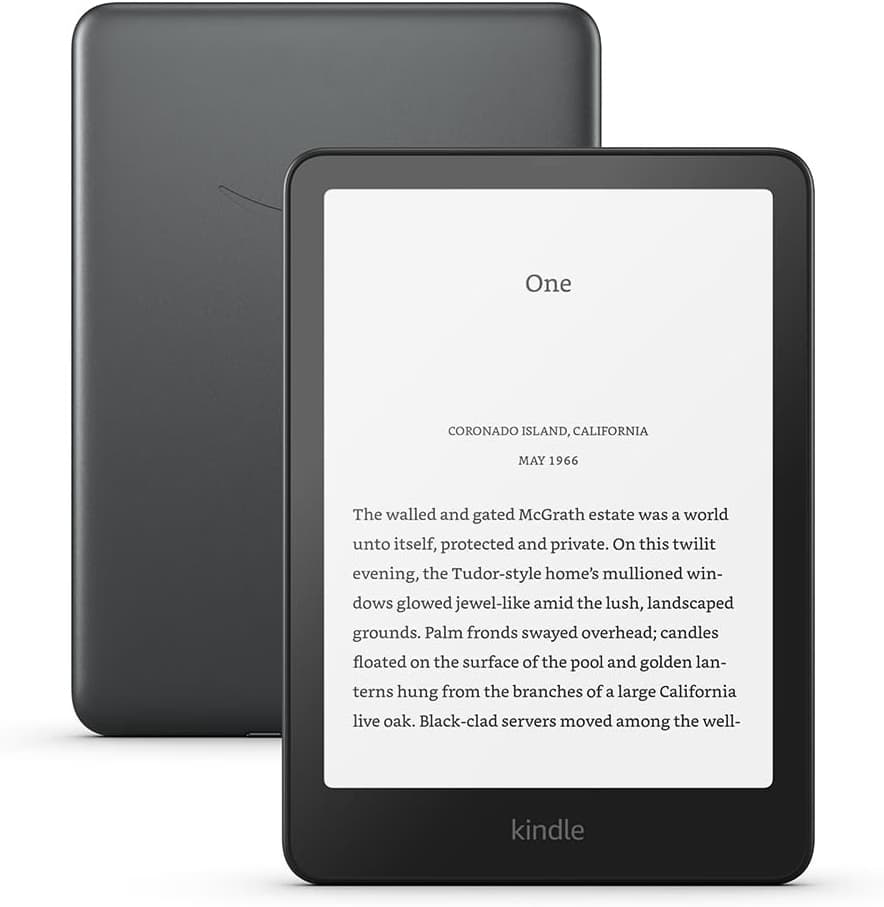
The same 7-inch shell, plus 32GB, Qi wireless charging, an auto-adjusting front light and no lockscreen adverts.
£189.99 at AmazonThe Signature Edition is not a better reader. It is the identical screen in an identical body, and side by side you could not tell which was which with the lights on. What it removes is friction: the adverts on the lockscreen, the business of plugging it in — it will sit on any Qi pad — and reaching for the brightness slider twice a day. The 32GB matters to almost nobody reading text and a great deal to anyone keeping an audiobook library on the device.
Because the shell is identical, cases and films are genuinely interchangeable between the two. That is one of the very few places in this catalogue where a listing naming two models is telling the truth, and it is worth knowing: it roughly doubles the range of covers available to you.
Buy the Signature for what it takes away, not for what it adds.
If your books have pictures in them: the Colorsoft
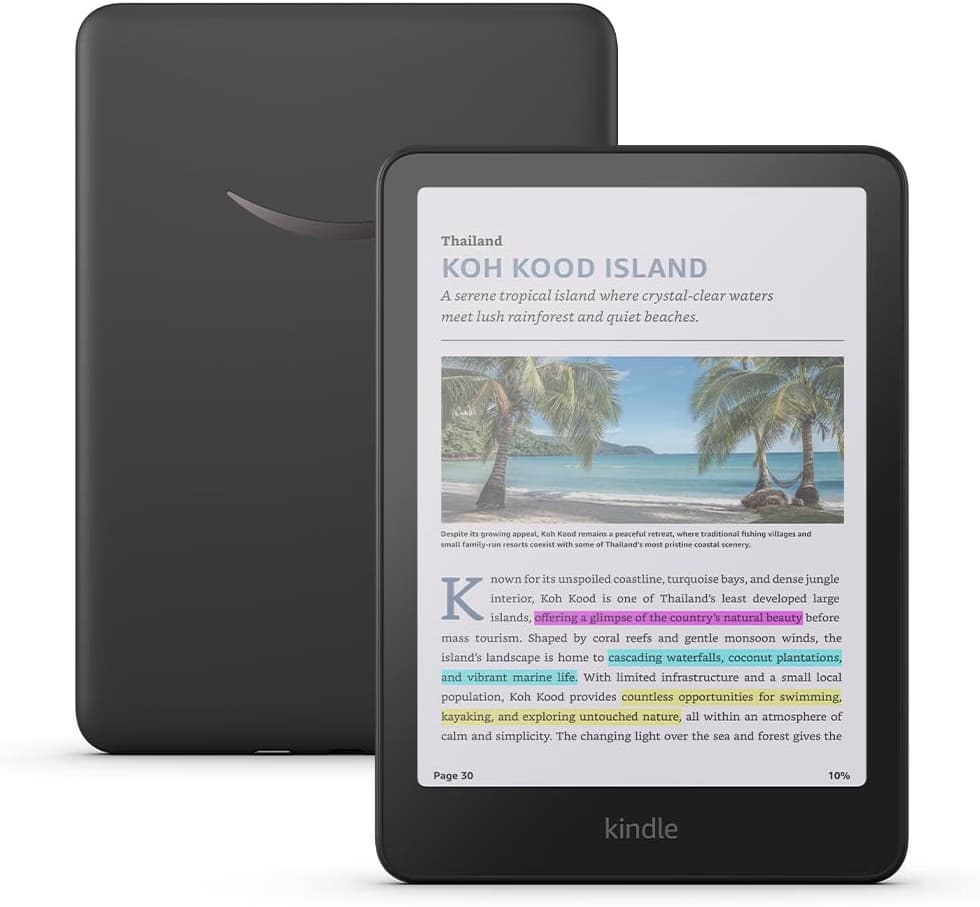
7-inch colour E Ink, 32GB, Qi charging, IPX8. The same footprint as the Paperwhite.
£269.99 at AmazonColour E Ink is not a colour screen in the way a tablet has one. It is a filter layer sitting over the same greyscale panel: colour resolves at a fraction of the text resolution, the whole display reads a shade darker than a Paperwhite, and nothing on it moves quickly. For comics, cookbooks, textbook diagrams, magazine covers and — the underrated one — colour-coded highlights that survive being exported, it is a real improvement on grey. For a novel, you are paying a premium and accepting a slightly dimmer page in exchange for nothing you will notice.
One buying note specific to this model. If you put a film on it, make it a matte one. A glossy protector fights the colour filter and turns the panel into a mirror under a reading lamp, which is the one problem E Ink was supposed to have solved.
Matte, cut for the Colorsoft's 7-inch panel. The same film is listed separately for the Paperwhite and the Scribe, and those are not the same size.
£18.99 at AmazonIf you want to write on it: the Scribe
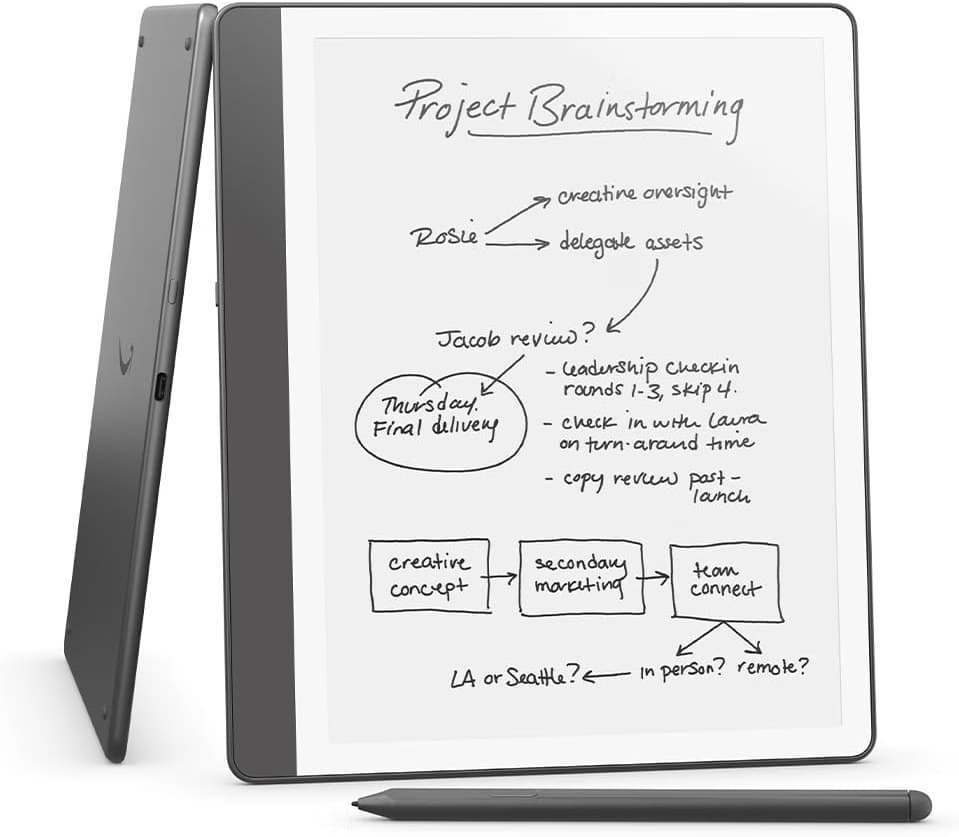
11-inch, 300ppi, Premium Pen in the box. Really a different category of object.
£449.99 at AmazonThe Scribe is not a larger Kindle so much as a notebook that also reads books. Eleven inches is where a PDF — a paper, a score, a manual, anything with a fixed layout — can be read at full size instead of reflowed into nonsense, and the pen makes margin notes and a blank notebook possible alongside it. The cost is that this is a two-handed device that you will not read in bed with one arm out from under the duvet, and that the pen is the most losable thing you will own.
One warning, and it is the reason this section has no case under it. The 2025 redesign took the Scribe from a 10.2-inch panel to an 11-inch one in a thinner body, and every Scribe folio and film in our index is cut for the outgoing shell. We have marked them unverified rather than quietly let them sit under the new model, and we are not going to recommend one to you until somebody here has put a Scribe in it. Buy the reader now if you want it; buy the folio — with a pen loop, because a bare sleeve is how pens are lost — once the listings have caught up with the body.
If a Kindle is the wrong answer
Two cases where it is. If you borrow from a public library, Kobo reads the EPUB files that Libby and OverDrive hand out natively, where a Kindle takes a longer route to the same book. And if you have ever resented a touchscreen page turn — gloves, cold hands, lying on one side — the Libra Colour has physical buttons down one edge, which no current Kindle does.
7-inch colour E Ink with physical page-turn buttons, and the only reader here that takes the Kobo Stylus 2.
The trade is the shop behind it. Amazon's catalogue is larger and is discounted more often, and if your existing library is already there then moving is a project rather than an afternoon. The asymmetric body also puts Kindle cases out of the question entirely — Kobo's own SleepCover is cut for that button edge, and a marketplace listing claiming otherwise is guessing.
What to buy alongside it
Three things, in the order they matter. A case, cut for the exact model and generation, because the screen is glass and the reader is going to live in a bag. A matte film, if you have chosen a colour or pen model, for the reasons above. And then nothing else: every one of these charges over USB-C from a phone charger you already own, and what comes in the box is a cable rather than a plug.
The cheap end of the Paperwhite case aisle, and enough. Confirm the generation on whatever you buy — this one is cut for the 12th.
£14.99 at AmazonFiled, as ever, against the exact model. Each reader above has its own page in the index listing what we could match to it, and — just as usefully — what we could not.
The retailer links in this piece are affiliate links — we earn a commission when you buy through them, at no extra cost to you. Prices are read out of our offer table as the page loads rather than typed into the copy, but they are the maker’s UK RRP rather than a live retailer price: the retailer’s own page is the final word.